
The DRIVE project (Deep Removal of CO₂ and InnoVative Electrification concepts) participated in the 18th International Conference on Greenhouse Gas Control Technologies (GHGT-18), held from 25 to 29 October 2026 in Perth, Australia, presenting important research findings on high-efficiency CO₂ capture and solvent degradation.
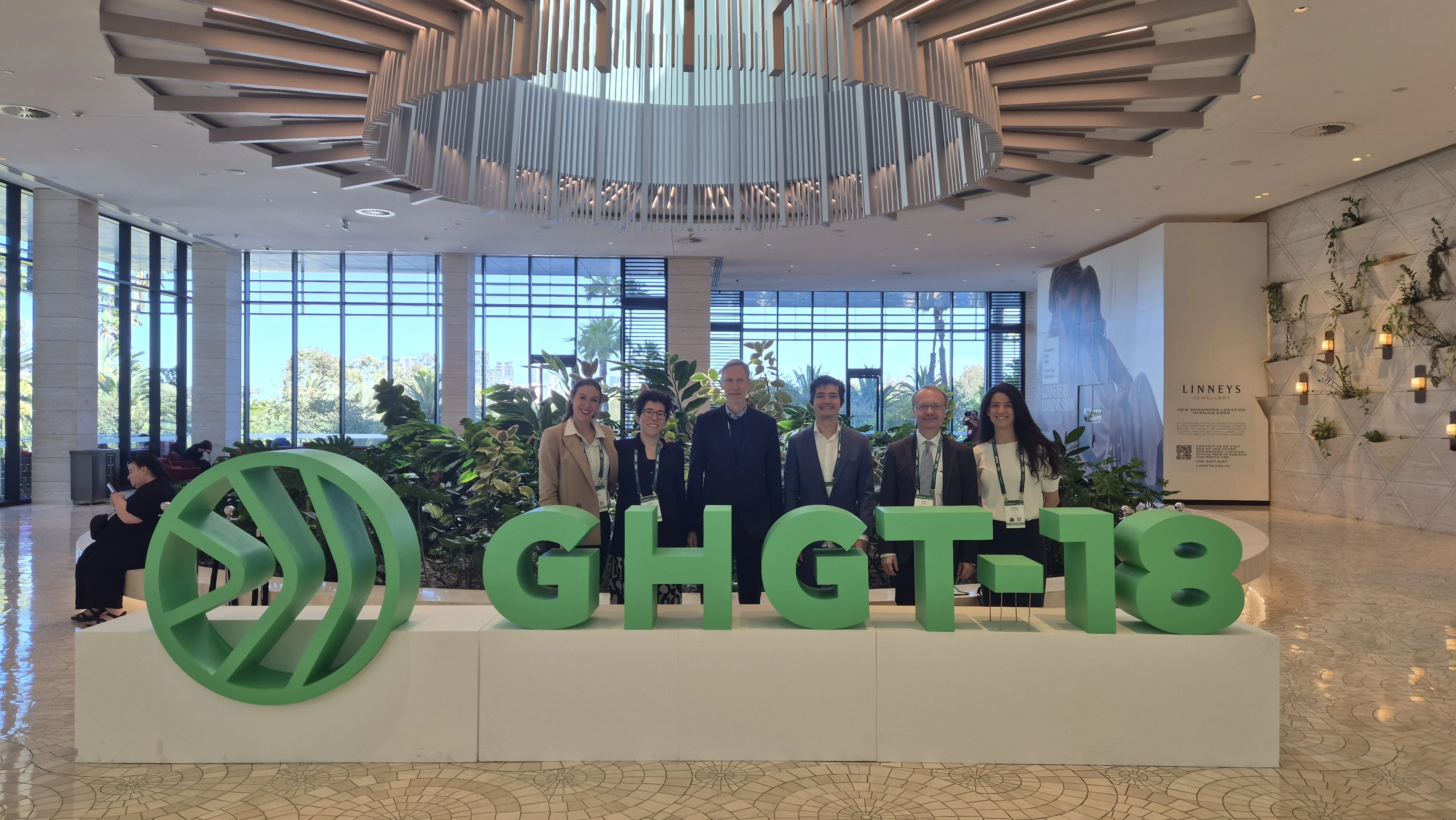
Organised by the International Energy Agency Greenhouse Gas R&D Programme (IEAGHG), GHGT-18 is one of the world’s leading international conferences dedicated to carbon capture, utilisation and storage (CCUS). This year’s event brought together approximately 1,100 researchers, industry representatives and policymakers from 41 countries, providing a valuable platform for exchanging scientific knowledge and discussing technological advancements supporting industrial decarbonisation.
DRIVE partners RWE, Hovyu and TNO contributed to the conference through two scientific presentations highlighting progress towards more efficient and sustainable CO₂ capture technologies.
Demonstrating CO₂ Capture Efficiencies of up to 99.5% in Long-Term Operation
One of the project’s main contributions was the presentation titled “98.5–99.5% CO₂ Capture Efficiency Demonstrated in Six Months Continuous Pilot Plant Operation with CESAR1.”
The research was conducted by Peter Moser, Georg Wiechers and Sandra Schmidt from RWE; Diego Di Domenico Pinto, Debadrita Ganguly and Elia Ferretti from Hovyu; and Didjay Bruggeman and Juliana Monteiro from TNO.
The presentation shared findings from five experimental campaigns conducted at RWE’s CO₂ capture pilot plant in Niederaussem, Germany, representing approximately 14 months of testing at very high capture rates.
A major achievement was the demonstration of more than 7,000 operating hours with CO₂ capture efficiencies exceeding 98%, significantly extending the evidence previously available from shorter experimental tests.
Particular attention was given to the latest six-month testing campaign, during which capture efficiencies between 98.5% and 99.5% were demonstrated using the CESAR1 solvent under real industrial operating conditions, without requiring additional equipment.
The research also provided valuable insights into the relationship between capture efficiency, energy consumption and solvent degradation. The findings confirmed that achieving very high CO₂ capture rates is technically feasible, while highlighting important trade-offs related to increased energy demand and solvent degradation.
Furthermore, experimental data were used to validate the ProTreat® process simulation model, supporting more accurate assessments of capture plant performance and future optimisation strategies.
Understanding Oxygen Depletion and Solvent Degradation
A second DRIVE-related contribution focused on the mechanisms affecting solvent degradation during CO₂ capture.
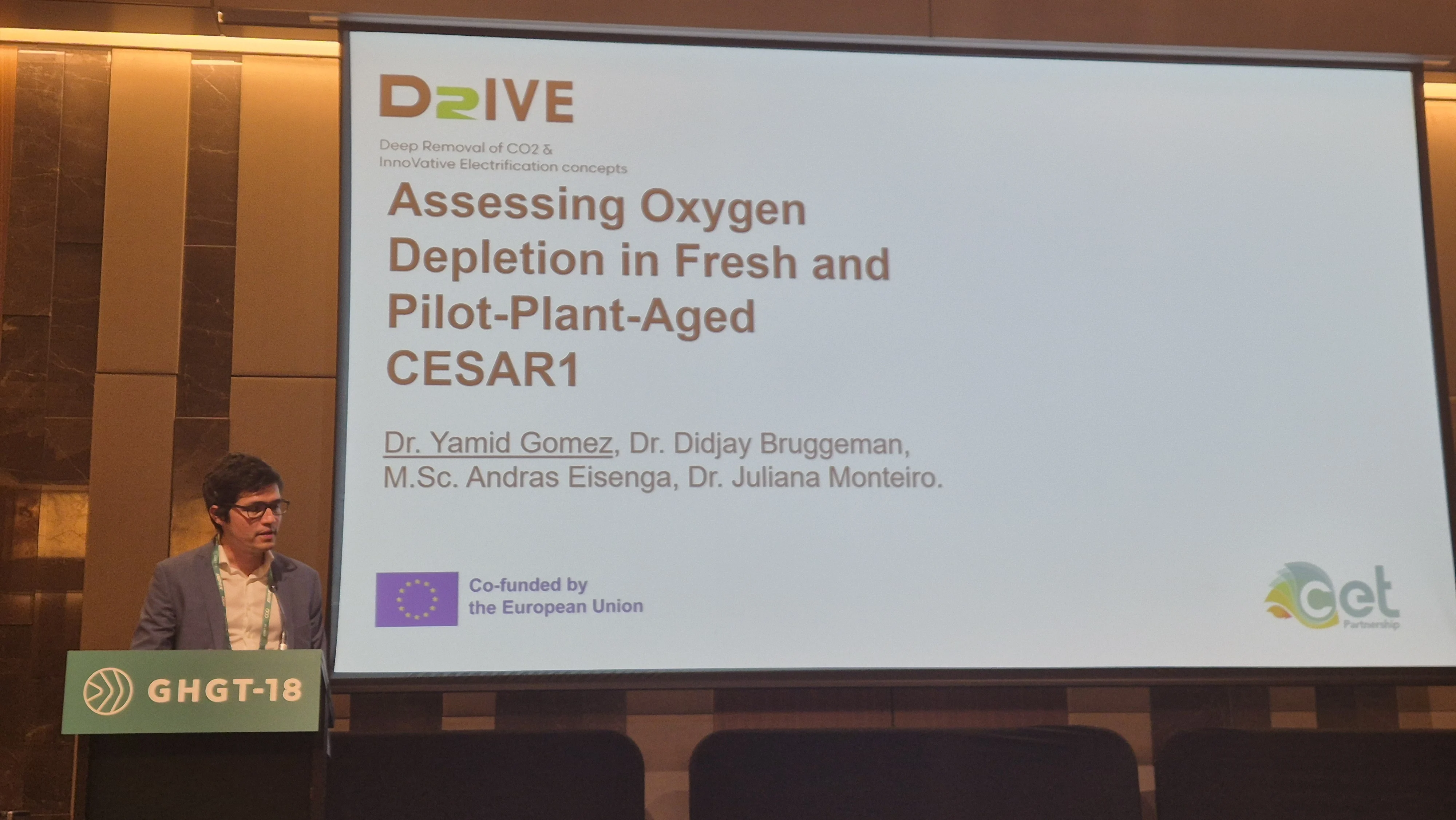
In the presentation “Assessing Oxygen Depletion in Fresh and Pilot-Plant-Aged CESAR1,” Yamid Gomez from TNO presented research conducted together with Didjay Bruggeman, Andras Eisenga and Juliana Monteiro.
The study investigated oxygen consumption in the CESAR1 solvent, combining laboratory experiments using the ODIN setup with solvent samples collected during DRIVE’s long-term pilot plant campaigns.
The results showed that oxygen consumption is strongly influenced by operating conditions, including temperature, CO₂ loading and solvent ageing.
Notably, pilot-plant-aged CESAR1 was found to consume oxygen considerably faster than fresh solvent, providing important insights into the processes associated with oxidative solvent degradation.
By integrating experimentally determined oxygen-consumption kinetics into process modelling, the research contributes to a better understanding of where oxygen is consumed and where degradation is most likely to occur within CO₂ capture systems.
These findings complement the operational results from the pilot plant and support the development of strategies to minimise solvent degradation and losses while maintaining high CO₂ capture performance.
Advancing the DRIVE Project’s Research Objectives
The participation of DRIVE at GHGT-18 marked an important opportunity to share the project’s research progress with the international CCUS community.
The findings demonstrate the potential of deep CO₂ removal technologies while underlining the importance of assessing their technical, economic and environmental performance under realistic operating conditions.
Building on these results, DRIVE will further investigate optimal plant configurations and operating conditions through validated process simulations, techno-economic assessments and Life Cycle Assessment (LCA).
By combining experimental research with advanced modelling and sustainability assessments, the project aims to support the development of more efficient and environmentally responsible CO₂ capture solutions, contributing to Europe’s clean energy transition and long-term climate objectives.
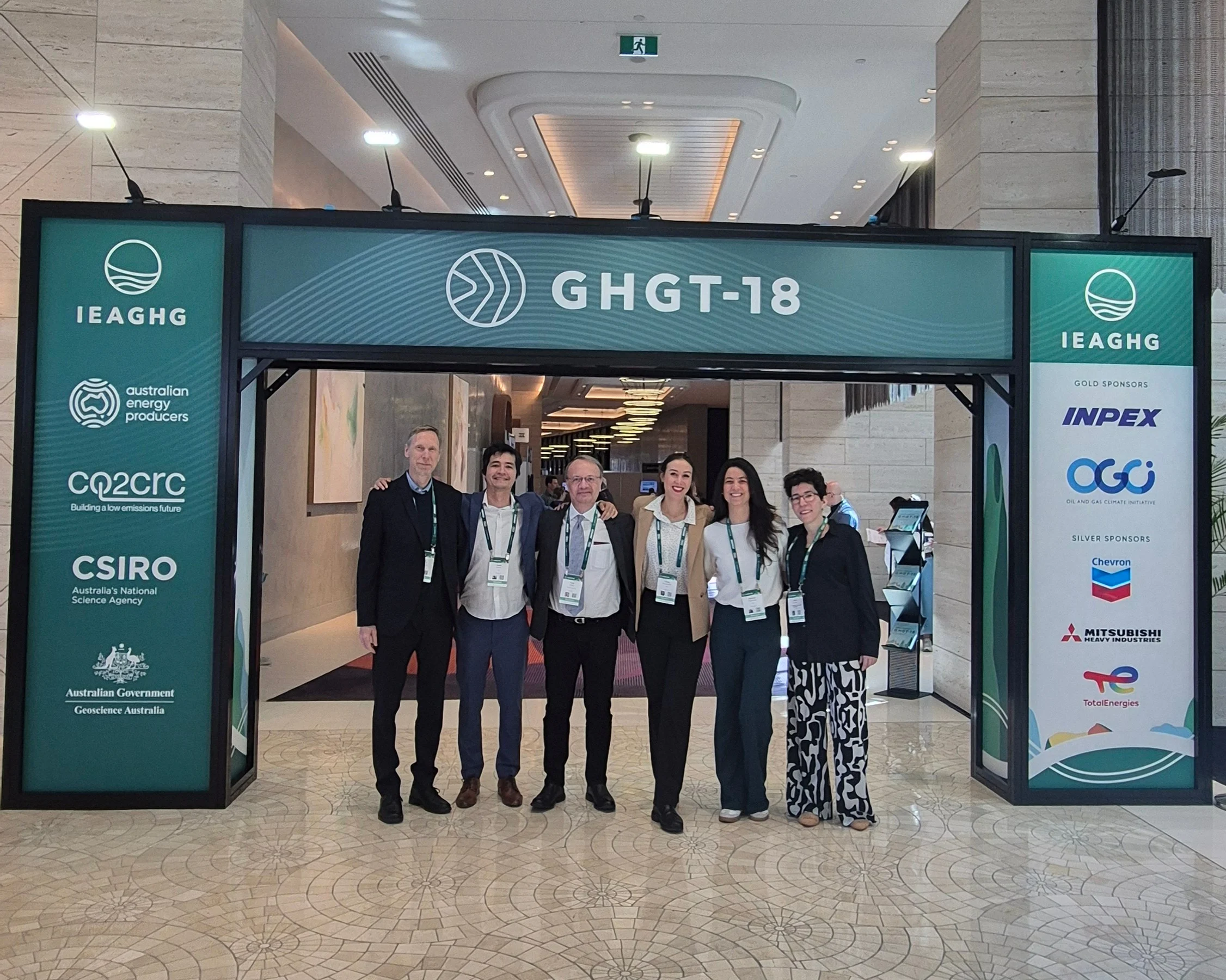
The DRIVE project is funded through CETPartnership, the Clean Energy Transition Partnership, under the 2022 Joint Call, co-funded by the European Union and participating national funding organisations.